














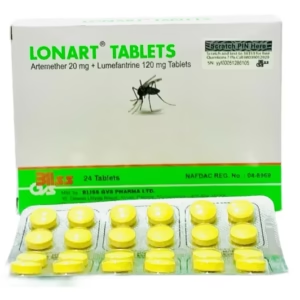

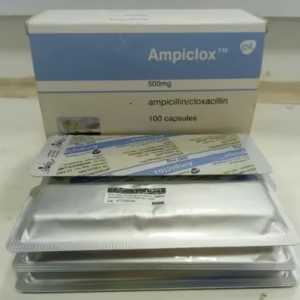




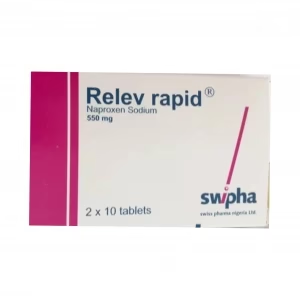

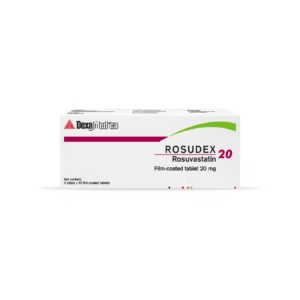





Missed a dose or found the pack empty? Do not guess or double up. Check the patient leaflet for that medicine and ask a pharmacist or prescriber if you are unsure.
Missed-dose instructions can differ according to the exact medicine, how often you take it, and how close you are to the next dose. Check the patient information leaflet or medicine label and contact a pharmacist or prescriber if you are unsure. Unless your prescriber has given you different instructions for that medicine, do not take a double dose to make up for one you missed.
Why one missed dose deserves attention—but not panic
High blood pressure, also called hypertension, often causes no symptoms. You may feel perfectly well even when your blood pressure is above a healthy range. That is one reason some people stop treatment or take it only when they feel a headache. Blood-pressure medicine is usually taken on a regular schedule, even when you feel well.
WHO reports that uncontrolled hypertension can contribute to heart disease, stroke, and kidney damage. Its 2023 country profile estimated that 19.1 million adults aged 30–79 in Nigeria were living with hypertension. Taking prescribed treatment consistently is therefore an important part of protecting long-term health.
One late or missed dose does not automatically mean an emergency. What matters is responding safely and preventing a single lapse from becoming a repeated pattern.
What to do when you notice a missed dose
1. Identify the exact medicine. Look at the pack, dispensing label, or prescription. Do not rely on the color or shape of the tablet; different medicines can look alike.
2. Check the medicine-specific instructions. Read the patient information leaflet and dispensing label. If the instructions are missing, unclear, or difficult to understand, call a pharmacist or the clinician who prescribed it.
3. Do not double the next dose on your own. Taking doses too close together may increase side effects. General missed-dose advice cannot replace instructions for your specific medicine.
4. Make a note of what happened. Record the medicine, scheduled time, and when you noticed. This helps a pharmacist or doctor give accurate advice, especially if more than one dose was missed.
5. Continue monitoring only as your care plan recommends. If you have been taught to check your blood pressure at home, write down the reading, date, and time. A home reading can help your clinician, but it should not be used to change or stop medicine without professional advice.
Contact a pharmacist or prescriber promptly if you have missed more than one dose, have kidney disease, take several medicines, or feel unwell. If you are pregnant, contact your prescriber or maternity team promptly; seek urgent assessment for a severe blood-pressure reading, severe headache, vision changes, upper-abdominal pain, or breathlessness.
After any accidental extra dose, contact a pharmacist, clinician, poison-information service, or emergency service promptly, even if you initially feel well, because harmful effects may be delayed. Seek emergency care immediately for fainting, severe dizziness, breathing difficulty, confusion, chest pain or marked weakness, and take the medicine pack with you.
Do not stop because you feel fine.
Feeling well does not show that hypertension has disappeared. A good blood-pressure reading may mean the treatment and lifestyle plan are working. Stopping or reducing a prescribed medicine without advice may allow blood pressure to rise again.
Side effects also deserve a conversation, not silent discontinuation. Dizziness, swelling, cough or another problem may have several causes. Tell your doctor or pharmacist what you are experiencing and when it began. They can assess whether the treatment needs review. Do not borrow another person’s tablets or replace your prescription with an herbal mixture or supplement; such products may interact with medicines or affect blood pressure.
Seven practical ways to miss fewer doses
Link the medicine to a daily routine. If the instructions allow it, connect the dose with a habit you rarely miss, such as brushing your teeth. Confirm with a pharmacist whether the medicine must be taken with food or at a particular time.
Use two reminders. Set a phone alarm and place a written reminder somewhere appropriate. Avoid leaving medicines in heat, direct sunlight, a humid bathroom, or within children’s reach just to keep them visible.
Keep one up-to-date medication list. Include medicine names, strengths, timing, and the prescriber. A caregiver can keep a copy, with the patient’s permission.
Use a pill organizer only after checking. Some medicines should remain in their original packaging. Ask a pharmacist whether an organizer is suitable and ensure every compartment is filled correctly.
Plan refills before the pack is empty. Check how many doses remain and begin the refill process early enough for prescription review, stock checks, and delivery or collection. Do not assume a medicine will always be immediately available.
Talk honestly about barriers. Cost, side effects, travel, a complicated schedule, and simple forgetfulness are real problems—not moral failures. A pharmacist or doctor may be able to simplify the routine or suggest safe options, but only the prescriber should approve treatment changes.
Build a respectful family check-in. For an older parent, agree on support that preserves their independence: a weekly call, shared refill calendar, or nominated caregiver. Avoid policing or shaming them.
For Nigerians supporting a parent from abroad
If you support a parent or relative in Nigeria who takes regular blood-pressure medicine, ask three practical questions: How many doses remain? When is the next clinical review? Who should be contacted if the prescription or medicine changes?
With their consent, keep an accurate medication list and agree on one local point of contact. Plan around weekends, travel, and prescription-processing time. The goal is continuity and reassurance, not control.
PharmNG’s MedFill service is designed to support recurring medication needs through refill and appointment reminders, prescription management, pharmacist support, medication reviews, and delivery coordination. Availability and delivery timing depend on the prescription, stock, destination, and order details, so confirm the current estimate when arranging a refill.
Know when the situation is urgent.
If the systolic reading is above 180 mmHg or the diastolic reading is above 120 mmHg and you have chest pain, difficulty breathing, back pain, numbness or weakness, vision changes, difficulty speaking, or another worrying symptom, go to the nearest emergency department or call the appropriate local emergency service immediately. Do not wait for a routine refill or online response. If you have no alarming symptoms, wait at least one minute, check again, and contact a clinician urgently if the reading remains this high.
A missed dose is a signal to check the instructions and strengthen the system around your care. It is not a reason to panic, double up, or abandon treatment.
Want help organizing recurring medicines? [Register for MedFill](https://pharm.com.ng/medfill/) to explore reminders, prescription management, and pharmacist support. Confirm current availability and delivery timing when enrolling.
Medical Safety Note
This article provides general health education, not individual medical advice. Missed-dose instructions vary by medicine and patient. Check the medicine leaflet or contact a pharmacist/prescriber; do not start, stop, double, or change a prescribed dose without appropriate professional advice. Seek urgent care for severe symptoms or a very high blood pressure reading with concerning symptoms.